
- remove_red_eye 225
- favorite 0
Book nook: what is it and why is it taking over bookshelves?
- today
- perm_identity Agnieszka Dąbrowska
- label Lifestyle
- description You will read in 7 mins.
Book nook: what is it and why is it taking over bookshelves?
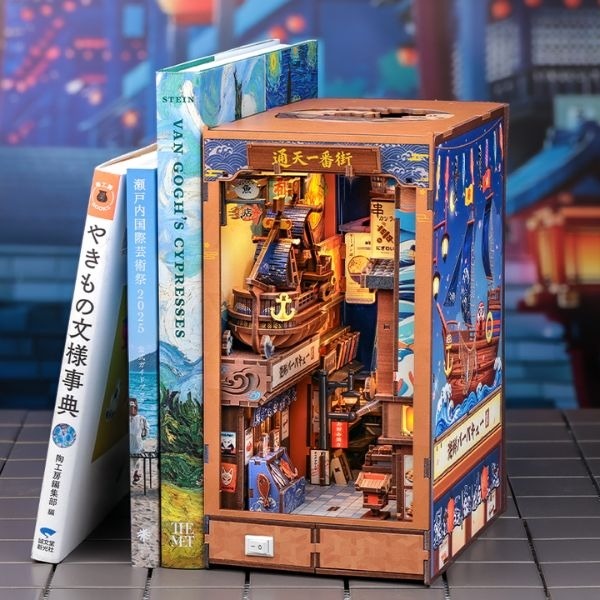
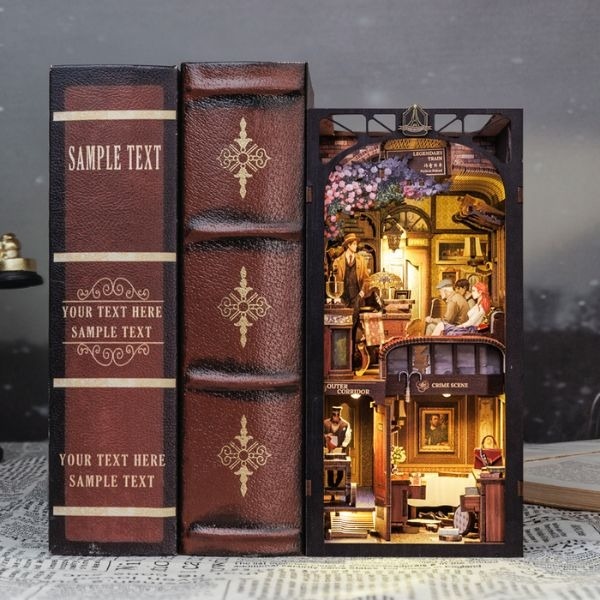
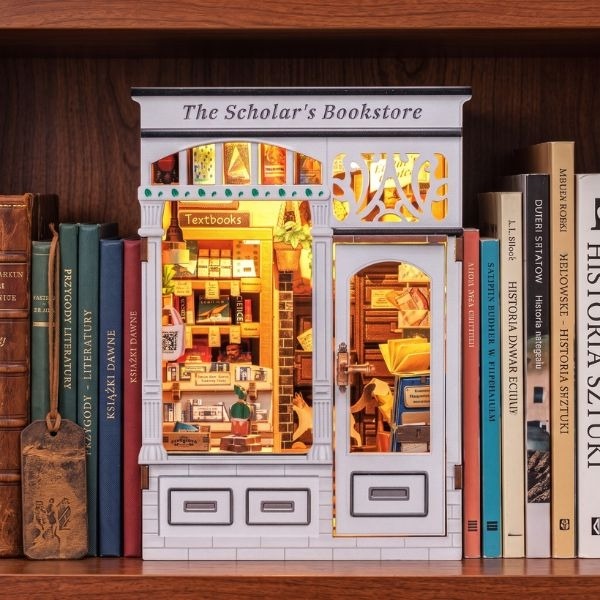
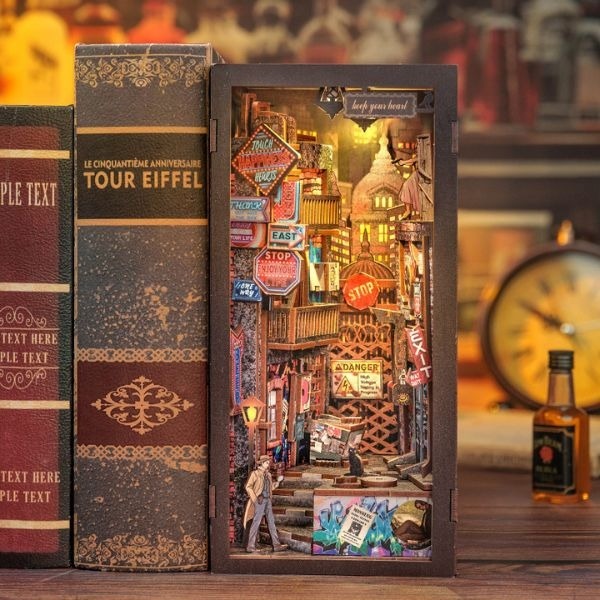
A book nook is a miniature, three-dimensional scene placed between books on a shelf — a street, bookshop, garden, or magical alley enclosed in a box about the size of a thick book. You build it from a DIY kit (pre-cut elements, usually LED lighting, and small details to glue in place) over several to a dozen or more hours. Kit prices: usually PLN 100–250.
The trend started with photos of bookshelves where, between the book spines, you could see a glowing entrance to a Harry Potter-style alley or a rainy Tokyo street. Book nooks (sometimes described in Polish as "book corners") emerged in 2018 and have become one of the hottest creative trends of recent years — because they combine three things at once: handicrafts, miniatures, and a love of books.
How does it work? The anatomy of a book nook
A book nook has the shape of a tall, narrow box (usually around 18–25 cm high, 8–12 cm wide, and 12–20 cm deep) that is placed on a shelf like a book.
Inside: a scene built in perspective — the depth of the box creates the effect: the further back you go, the smaller the elements become, making the alley look longer than it really is. Most kits include LED lighting (battery- or USB-powered), which creates half the magic: in the evening, a shelf with an illuminated book nook looks like a window into another world. Common themes include bookshops and libraries, Japanese streets, flower shops, and stores filled with magical artifacts.
DIY kit or ready-made book nook?
Building it is at the heart of the trend: a DIY kit contains pre-cut elements (usually wood or cardboard), window film, wires, "plants", miniature furniture, LEDs, and illustrated instructions. Assembly takes several to a dozen or more hours of work with glue and tweezers — something between 3D puzzles (internal link) and a dollhouse for adults. Ready-made, assembled book nooks do exist, but they cost 2–3 times more and skip the best part: evenings spent putting everything together. For people who love miniatures but not gluing, simpler kits with fewer elements are a good compromise.
Who is a book nook perfect for?
- Book lovers: the decoration lives in its natural environment — on a bookshelf; a bookshop theme is a safe gift choice.
- Fans of miniatures and model making: working with tweezers, perspective, and light — the same level of satisfaction as building models, but in a smaller format.
- People looking for a hobby project: unlike paint by numbers (internal link), a book nook is a construction project with a clear finish and a lasting result.
- As a gift "for someone who already has everything": surprising, personal (you can match the theme to their interests), and in the price range of a good gift (PLN 100–250) — it joins our list of ideas for original gifts (internal link).
What should you look for before buying a kit?
- Number of elements and assembly time: for your first kit, choose one with up to around 200 pieces; leave the 500+ piece "cathedrals" for your second project.
- Illustrated instructions (preferably with numbered parts) — with miniatures, they determine how enjoyable the process will be.
- LED lighting included and the power source (batteries vs USB) — without lighting, a book nook loses much of its charm.
- Dimensions vs your shelf: check the height between shelves and the shelf depth before buying, not after.
- Age: these are kits for adults and teenagers (usually 14+) — small parts and glue make them unsuitable for young children.
FAQ: Frequently asked questions about book nooks:
Summary
Book nooks are a trend that is here to stay: bookshelves are found in almost every home, and a magical little window between the book spines does not get boring like an ordinary decoration. Start with a simpler kit with LED lighting and a theme close to your heart — and evenings spent assembling miniatures will draw you in faster than you expect.
Photo gallery